The biggest difference between an above-ground and an in-ground trampoline is height: one puts the jumping surface a few feet in the air, the other puts it level with your yard.
That one difference shapes almost everything else, from safety and looks to installation, upkeep, and cost. Above-ground trampolines are cheaper and easier to move. In-ground trampolines take more work up front but sit flush with the grass, look cleaner, and take a fall off the edge out of the equation. Here’s how the two compare so you can pick the right fit for your family and your yard.
Here’s the quick version:
- Safety: In-ground wins. The mat sits at ground level, so there’s no drop to the ground.
- Appearance: In-ground blends into the yard. Above-ground stands out.
- Setup: Above-ground is faster. In-ground means digging a pit, either yourself or with a pro crew.
- Portability: Above-ground can move. In-ground stays put.
- Cost: Above-ground costs less up front. In-ground is a longer-term investment in your backyard.

How An In-Ground Trampoline Differs From An Above-Ground Trampoline
An above-ground trampoline is the classic backyard setup: a round or rectangular frame on legs, springs, a jump mat, and usually a net enclosure. Jumpers climb up, and the mat sits a few feet off the ground.
An in-ground trampoline uses the same basic frame, springs, and mat, but it’s set into a shallow pit lined with a retaining wall. The mat ends up level with the grass. Because the pit is enclosed, in-ground models rely on vented pads or other airflow so the mat can push air in and out as you bounce. Our page on why families choose in-ground trampolines covers the bigger picture.
Safety: Above-Ground vs In-Ground Trampolines
Safety is where the two differ most. With an above-ground trampoline, a jumper who bounces off the edge falls several feet to the ground. The American Academy of Orthopaedic Surgeons lists falls off the trampoline onto the ground or other hard surfaces as a common cause of injury, and its safety guidance says to place the jumping surface at ground level.
That’s exactly what an in-ground trampoline does. There’s no ladder to climb, no drop off the side, and no open space underneath where a child could crawl while someone is jumping. Padding over the frame and springs covers the rest, and our post on edge padding for in-ground trampolines explains why it matters.
Ground level doesn’t make any trampoline risk free, though. AAOS notes that three-fourths of injuries involve two or more children jumping at the same time, and Mayo Clinic Health System recommends only one jumper at a time, no somersaults, and adult supervision. Those rules apply to both types. If you’re weighing a net, see whether an in-ground trampoline needs a safety net.
Appearance And How Each Fits Your Yard
An above-ground trampoline is hard to miss. The frame, legs, and tall net enclosure can take over a small yard and block the view from your patio.
An in-ground trampoline sits flush with the lawn, so it looks like part of the landscaping instead of a piece of equipment parked on it. That makes a real difference in smaller Arizona backyards, where every square foot counts. You can see finished installs in our in-ground trampoline gallery. Homeowners notice the difference in the finished result, too:
“They installed an Explorer oval trampoline in my small backyard a few weeks ago and we’re still very impressed with the quality of work.”
Alex worley, Google review
Installation And Setup: What Each Takes
Above-ground trampolines win on setup. You need a flat, open spot, a few hours, and the assembly instructions.
An in-ground trampoline takes more work because you’re digging a pit, building the retaining wall, and planning for drainage before the frame goes in. You have two options. Our in-ground kits are designed to be easy to install yourself, and our step-by-step DIY installation guide walks you through it. Or, in Arizona, our crew can handle the whole job.
Good drainage is the part not to skip, so read up on drainage solutions for in-ground trampolines before you dig.
A professional install is often done in a single day, which customers mention on their own:
“The crew arrived on time, worked around our schedules, and got everything done quickly.”
Garron Cadiente, Google review
Maintenance And Durability In Arizona Weather
Both types need regular care, but the challenges are different. An above-ground trampoline is fully exposed to wind, so it may need anchoring during storms. An in-ground trampoline sits below the wind, but it depends on its pit draining well, especially during monsoon season.
For either type, sun is the biggest enemy in the Valley. Mats, pads, and nets break down faster under intense UV, so a cover and regular checks go a long way.
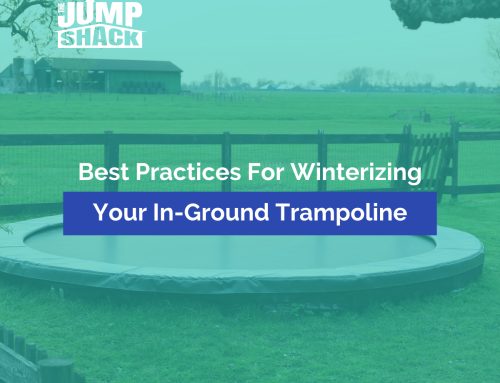
We cover this in protecting your trampoline during Arizona summers, and for cooler months, see our guide to winterizing an in-ground trampoline.
For year-round habits, use our in-ground trampoline care guide.
Cost And Portability: What You’re Paying For
An above-ground trampoline almost always costs less up front. There’s no digging, no retaining wall, and no installation labor. It’s also portable, so you can move it to reseed the lawn, take it apart for storage, or bring it with you when you move.
An in-ground trampoline costs more because you’re paying for the pit, the wall, and the labor or your own weekend of work. It’s a permanent part of your yard, so it isn’t coming with you if you move. In return, you get a setup that’s lower to the ground, blends into your landscaping, and doesn’t need to be moved to mow around. Compare current options in our in-ground trampoline shop and our above-ground trampolines.
Which Trampoline Is Right For Your Family?
An in-ground trampoline is usually the better fit if you have young kids, a yard you want to keep looking clean, and plans to stay in your home for a while. It’s easy for little ones to get on and off, and there’s no climb.
An above-ground trampoline makes more sense if you rent, expect to move soon, or want the lowest upfront cost. For more on who each type suits, read whether in-ground trampolines work for all ages.
Above-Ground vs In-Ground Trampoline Comparison
| Factor | Above-Ground | In-Ground |
| Jump Height | Mat sits a few feet off the ground. | Mat sits level with the yard. |
| Fall Risk | Falls off the edge drop to the ground. | No drop off the edge. |
| Appearance | Visible frame, legs, and net. | Blends into the landscaping. |
| Setup | Assemble on level ground. | Dig a pit; DIY kit or pro install. |
| Weather | May need anchoring in wind. | Needs good pit drainage. |
| Portability | Can be moved or stored. | Permanent. |
| Upfront Cost | Lower. | Higher. |
Above-Ground vs In-Ground Trampoline FAQs
Is An In-Ground Trampoline Safer Than An Above-Ground Trampoline?
In-ground trampolines remove the fall from height off the edge, which is one of the common causes of trampoline injuries. Collisions between jumpers can still happen on either type, so stick to one jumper at a time and supervise kids.
Do In-Ground Trampolines Bounce As Well As Above-Ground Ones?
They can, as long as air can move in and out of the pit. That’s why in-ground models use vented frame pads or other venting.
Can I Install An In-Ground Trampoline Myself?
Yes. Our kits are designed for DIY installation if you’re comfortable digging and following the steps. In Arizona, you can also have our crew install it for you.
Does An In-Ground Trampoline Need A Net?
It isn’t required the way it is on an above-ground model, since there’s no drop off the edge. Some families still add one for younger kids or to keep jumpers centered.
Can I Move An In-Ground Trampoline Later?
Not easily. Once it’s installed, the pit and retaining wall stay in your yard. If you expect to move soon, an above-ground trampoline may be the better choice.
Which Is Better For A Small Backyard?
Usually an in-ground trampoline. It sits flush with the lawn, so it doesn’t visually crowd the space or block views the way a raised frame and net do.
Find The Right Trampoline For Your Arizona Backyard
Whether you’re leaning toward in-ground or still comparing, we’re happy to walk you through sizes, installation options, and what will work best in your yard.
Call us at (800) 414-2001 or contact The Jump Shack to talk with a specialist.

The Jump Shack
1528 W San Pedro St #4
Gilbert, AZ 85233
Tel: (800) 414-2001
Email: [email protected]
Website: aztrampoline.com